Polio Update Report
 In 1979, when most of the world's children were unvaccinated against polio, Rotary took on the cause of eliminating the crippling disease by universally vaccinating every child. Today, with more than 2.5 billion children worldwide vaccinated and immune from polio, new cases have be reduced to a few per year and contained to two countries, Pakistan and Afghanistan.
07-Octber-2026, World Health Organization
Rotary in action – protecting children in Pakistan
In Pakistan, Rotary’s contribution to polio eradication goes far beyond fundraising. Working alongside the national programme and partners, Rotarians are helping bring vaccines and other essential health services closer to communities, build trust with families and reach children who might otherwise be missed - demonstrating the unique value of Rotary’s local networks and sustained commitment to finishing polio for good. More.
Independent Monitoring Board publishes its 25th report
The Independent Monitoring Board (IMB) has published its 25th report, providing a candid assessment of progress and remaining challenges on the road to a polio-free world. The report highlights encouraging progress in Pakistan alongside a shifting epidemiological focus towards Afghanistan, while setting out 21 recommendations to accelerate eradication and strengthen the systems needed to sustain a polio-free world.
Global Certification Commission reviews progress towards a polio-free world
The Global Certification Commission for the Eradication of Poliomyelitis (GCC) met in Geneva last week to review progress towards global polio eradication, including updates from all six WHO Regions and the two countries where wild poliovirus remains endemic. The Commission also reviewed the status and performance of poliovirus surveillance – a critical component of demonstrating that transmission has been interrupted. The GCC’s report and recommendations will be published in due course.
Summary of new polioviruses this week:
· Afghanistan : one WPV1-positive environmental sample
· Pakistan : one WPV1 case and eight WPV1-positive environmental samples
· Central African Republic (CAR): one cVDPV2-positive environmental sample
· DR Congo : six cVDPV2 cases
· South Sudan : five cVDPV1 cases and one cVDPV2 case
Officially reported WPV1 and cVDPV cases as of 06 October 2026
Wild poliovirus (WPV)
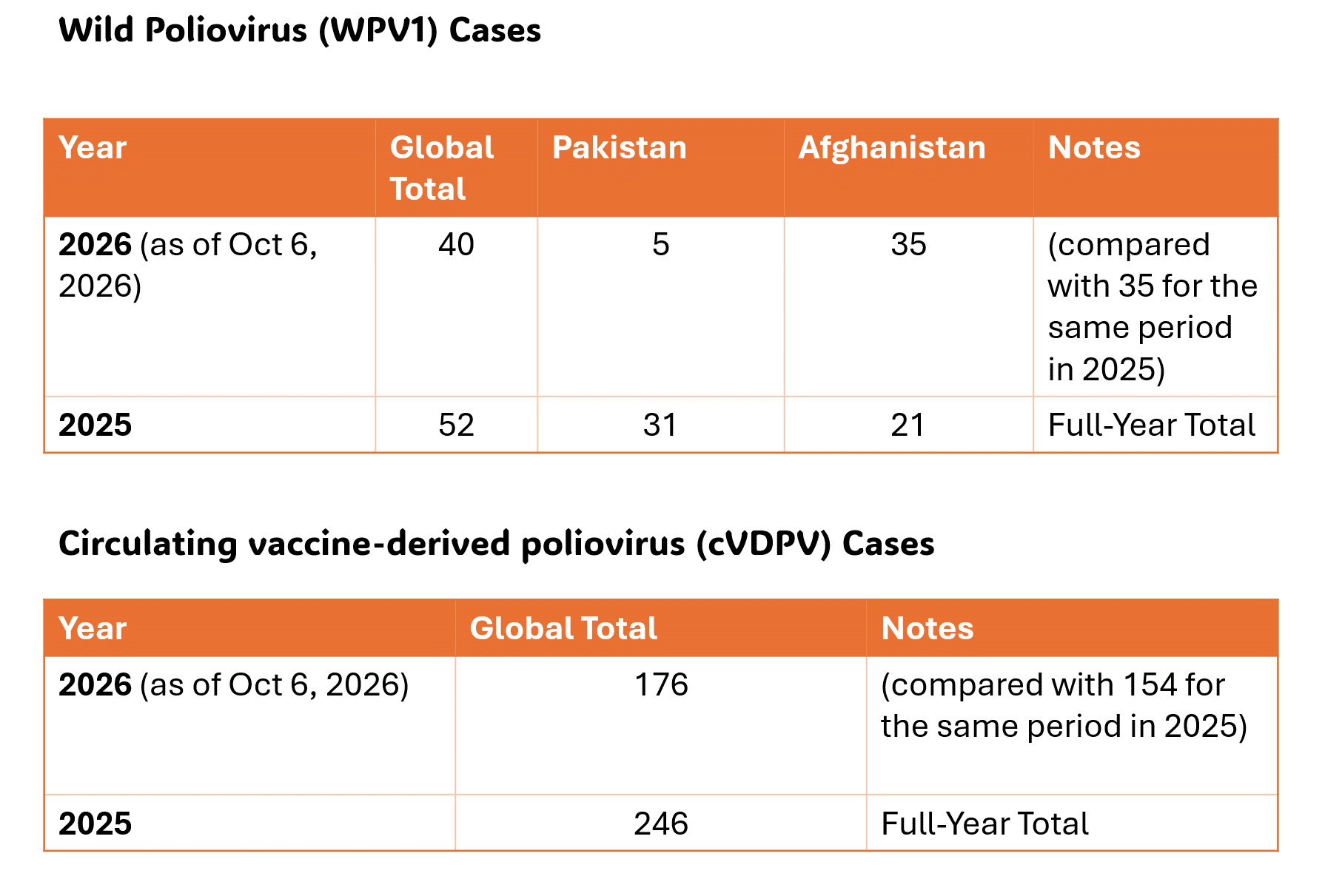
· Total global WPV1 cases in 2025: 52
· Total global WPV1: cases in 2026: 40 (compared with 35 for the same period in 2025)
Circulating vaccine-derived poliovirus (cVDPV) cases
· Total global cVDPV cases in 2025: 246
· Total global cVDPV cases in 2026: 176 (compared with 154 for the same period in 2025)
ü Link to subscribe to monthly newsletter Polio News in your weekly update.
ü Link to unsubscribe to the Polio weekly global updates

https://polioeradication.org/ for more information